Heat Transfer Printing on Glass | HyunTech
Heat Transfer Printing on Glass: Technology, Applications, Process & Cost Guide
Heat transfer printing on glass is a decoration technology that uses Heat Transfer Film to transfer images, logos, patterns, or brand information onto the surface of glass products.
This solution can be applied to a wide range of products, including glass bottles, cosmetic jars, perfume bottles, cups, glasses, containers, boxes, and other glass packaging products.
For businesses manufacturing packaging, cosmetics, beverages, food, and household products, direct decoration helps strengthen brand recognition, differentiate product designs, and enhance overall product aesthetics.
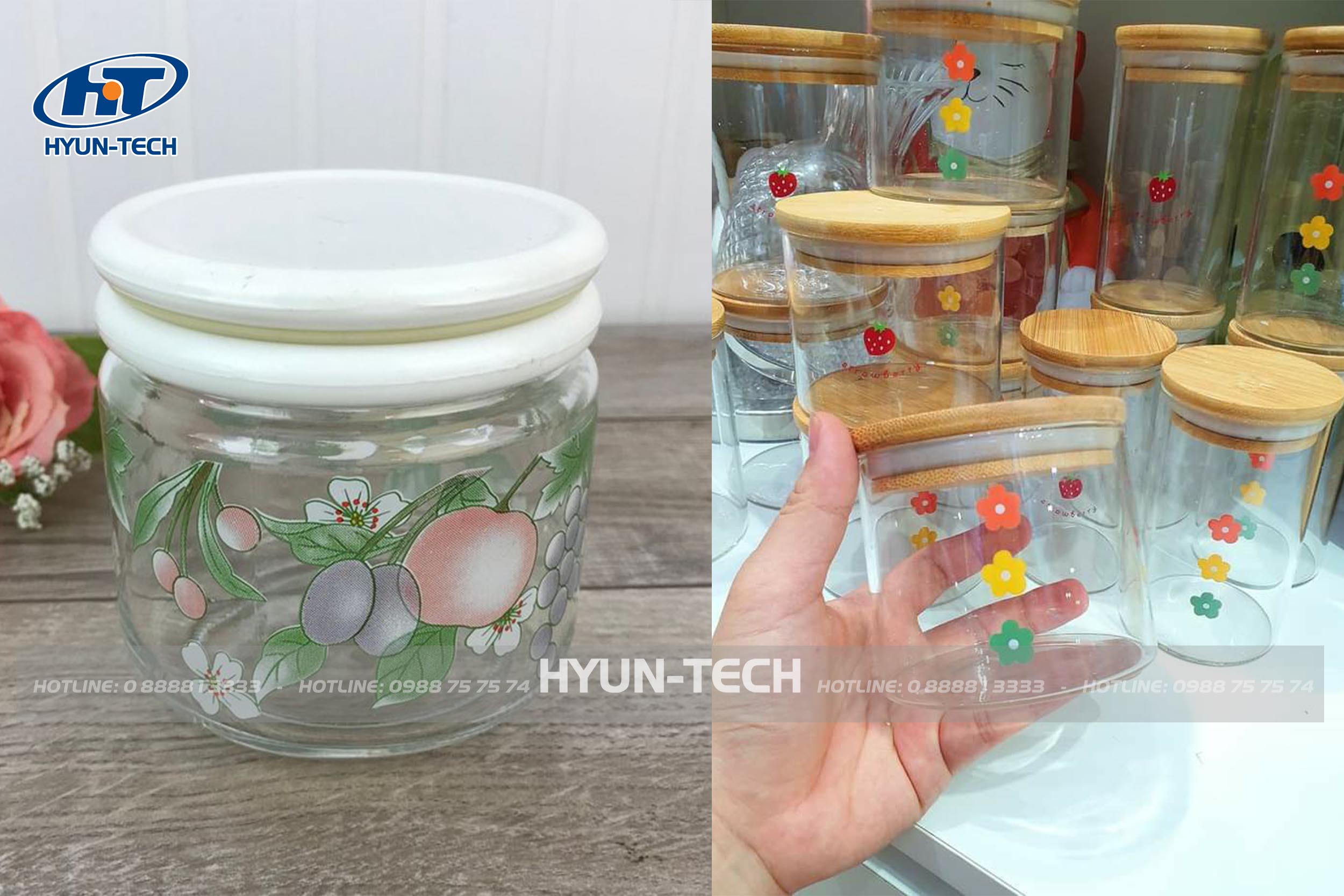
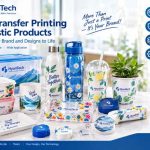
Glass bottles, jars, and cups decorated with logos and patterns using Heat Transfer Film technology
Read more: What Is Heat Transfer Printing?
What Is Heat Transfer Printing on Glass?
Heat transfer printing on glass is a method that uses heat transfer film as an intermediate layer to transfer images or patterns onto a glass surface through the application of heat and pressure.
Instead of printing directly onto the glass using conventional methods, the image is first produced on Heat Transfer Film. The film is then positioned on the product and transferred using specialized heat transfer equipment.
The film structure, adhesive layer, temperature, pressure, processing time, and characteristics of the glass surface can all affect the final transfer quality.
Therefore, a single fixed heat transfer setting should not be applied to every glass product. For each bottle, jar, cup, or glass packaging product, sample testing should be performed to determine the appropriate film structure and transfer conditions.
Glass Products Suitable for Heat Transfer Printing
Heat Transfer Film technology can be evaluated and applied to a wide range of glass products.
| Product | Printable Content | Applications |
|---|---|---|
| Glass bottles | Logos, images, patterns | Beverages, food |
| Glass jars | Logos, brand information | Cosmetics, beauty products |
| Perfume bottles | Premium logos and patterns | Perfumes |
| Cosmetic bottles | Logos, product names | Serums, essences, cosmetics |
| Glass cups | Logos, slogans, images | Household products, gifts |
| Glasses | Logos, patterns | Restaurants, hotels |
| Glass containers | Logos, images | Household products |
| Food jars | Logos, product information | Food, spices |
| Glass boxes | Logos, patterns | Food packaging |
| Decorative glass products | Images, patterns | Gifts, decoration |
Advantages of Heat Transfer Printing on Glass
High-Quality Images and Logos
Heat Transfer Film allows logos, patterns, images, and brand designs to be reproduced on product surfaces.
For products such as perfume bottles, cosmetic packaging, and beverage containers, exterior design plays an important role in brand recognition and customer perception.
Flexible Design Options
Businesses can develop different designs for individual product lines.
Commonly printed elements include:
- Brand logos
- Product names
- Decorative patterns
- Brand imagery
- Slogans
- Brand information
- Collection-specific designs
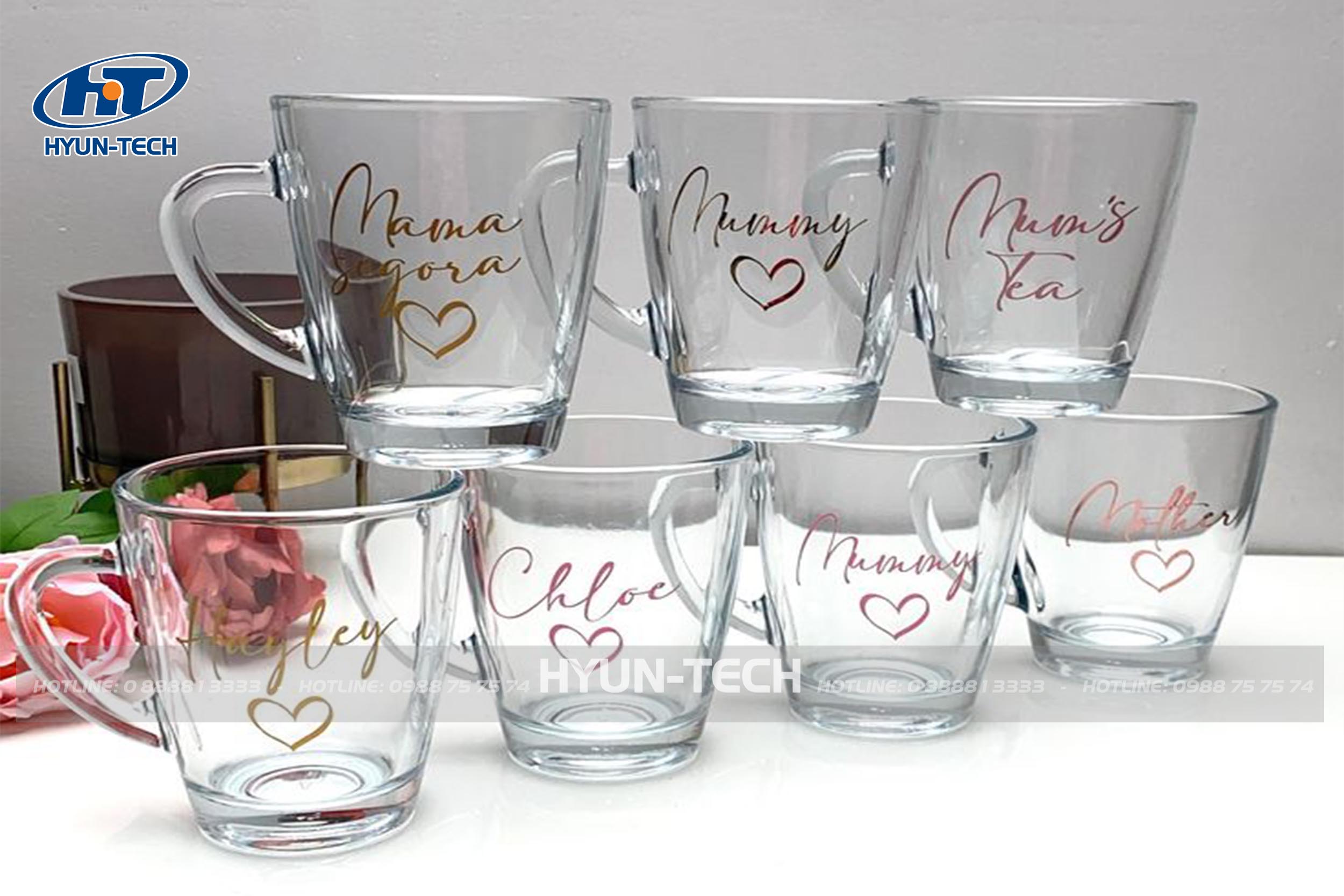
A collection of glass bottles, jars, cups, glasses, and glass boxes decorated with brand logos and patterns using heat transfer technology
Suitable for Different Product Shapes
Heat transfer printing can be considered not only for flat surfaces but also for cylindrical or curved products such as bottles and jars.
However, products with significant curvature require appropriate positioning and transfer methods to minimize image distortion or misalignment.
Suitable for Industrial Production
Once the material, transfer film, and production process have been properly established, the process can be standardized for large-volume manufacturing.
This is particularly relevant for manufacturers of packaging, cosmetics, food, beverages, household products, and other consumer goods.
Heat Transfer Printing Process on Glass
The actual production process varies depending on the product and technical requirements. A basic process includes the following steps:
Product Sample Evaluation
The customer provides a sample bottle, jar, cup, or other glass product for printing.
HyunTech evaluates:
- Material and surface characteristics
- Product dimensions
- Surface curvature
- Printing position
- Print size
- Expected production volume
- Durability requirements
Heat Transfer Film Design and Production
The artwork is prepared according to the required printing size and position.
The image is then produced on Heat Transfer Film with a structure suitable for the target glass product.
Sample Testing
This is a particularly important step for glass products.
HyunTech performs testing on the actual product to evaluate:
- Adhesion
- Image sharpness
- Color accuracy
- Transfer performance
- Uniformity
- Abrasion resistance
- Suitability for the intended application
Heat Transfer Application
The film is positioned on the product before being placed into the heat transfer equipment.
Temperature, processing time, and pressure are adjusted according to the film structure and product characteristics.
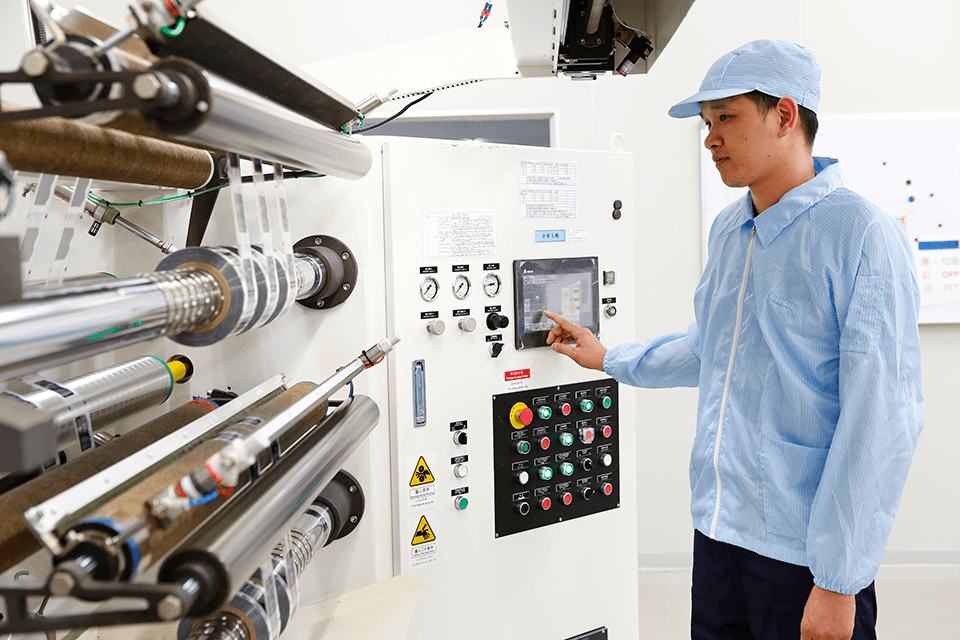
Product inspection, Heat Transfer Film selection, sample testing, heat transfer application, and final product quality inspection.
Post-Transfer Inspection
After transfer, the finished products are inspected according to appearance and technical quality requirements specified by the customer.
Technical Parameters for Heat Transfer Printing on Glass
The following parameters are provided as general references for developing a testing process. Final production parameters must be determined based on the specific product and film configuration.
| Parameter | Reference / Direction | Notes |
|---|---|---|
| Film substrate | PET | Depends on film structure |
| Material | Glass | Bottles, jars, cups, boxes, etc. |
| Method | Heat transfer | Uses heat and pressure |
| Temperature | Requires actual testing | No single fixed setting applies to all products |
| Processing time | Requires actual testing | Depends on film structure |
| Pressure | Requires adjustment | Depends on product shape |
| Surface | Flat / curved / cylindrical | Affects the transfer process |
| Print size | According to requirements | Must be determined before production |
| Color | According to design | Sample approval may be required |
| Durability | According to application requirements | Requires actual testing |
Important: Heat transfer temperature should not be determined solely based on the heat resistance of the film. Optimal conditions must be determined by considering the film, adhesive layer, glass product, equipment, and required durability together.
Heat Transfer Printing Cost on Glass
The cost of heat transfer printing on glass depends on multiple factors, so there is no single fixed price for every product.
| Service / Item | Reference Price | Key Cost Factors |
|---|---|---|
| Sample testing | Contact for quotation | Product type and requirements |
| Heat Transfer Film | Contact for quotation | Size, structure, production volume |
| Heat transfer processing | Contact for quotation | Quantity and product shape |
| Printing on glass bottles | Contact for quotation | Printing area and size |
| Printing on glass jars | Contact for quotation | Design and production volume |
| Printing on glass cups / glasses | Contact for quotation | Size and shape |
| Industrial production orders | Project-based quotation | Production volume and technical requirements |
For large-volume orders, HyunTech determines pricing based on the product sample, print size, quantity, durability requirements, and production method.
Therefore, instead of simply asking “How much does heat transfer printing on glass cost?”, businesses should provide a product sample or detailed product information to receive a more accurate quotation.
Factors Affecting the Cost of Heat Transfer Printing on Glass
Production Volume
Larger production volumes provide greater opportunities to optimize setup, material, and processing costs per unit.
Printing Area
The size of the printing area directly affects the amount of film required and processing time.
Product Shape
Cylindrical bottles, curved jars, and other non-flat products may require different positioning and heat transfer methods compared with flat surfaces.
Design
Simple logos and highly detailed, multi-color designs may involve different production requirements.
Durability Requirements
If the product is frequently exposed to water, friction, heat, or other demanding conditions, the film structure and transfer process must be selected accordingly.
Industries Using Heat Transfer Printing on Glass
Cosmetics and Perfumes
Perfume bottles, serum jars, essence bottles, and cosmetic packaging are product categories with high requirements for visual appearance and brand recognition.
Food Packaging
Glass spice jars, sauce bottles, food containers, and other types of glass packaging can be decorated with logos and patterns.
Beverages
Glass beverage bottles can be decorated with brand identities, images, and customized designs.
Household Products
Glass cups, glasses, containers, and other household glass products can feature printed logos or decorative patterns.
Corporate Gifts
Glass products used as corporate gifts can be customized with company logos, business names, or brand messages.
Heat Transfer Printing vs. Labels on Glass
| Criteria | Heat Transfer Printing | Labels |
|---|---|---|
| Aesthetics | High, flexible design options | Depends on label type |
| Brand presentation | Design is transferred onto the product surface | Communicated through an applied label |
| Design flexibility | Flexible | Flexible |
| Curved surfaces | Can be applied, but requires testing | Depends on label material |
| Large-volume production | Suitable | Suitable |
| Technical requirements | Requires control of heat, pressure, and film | Generally simpler |
| Customization | High | High |
The appropriate technology should be selected based on the product type, production volume, aesthetic requirements, durability, and overall cost.
Common Problems in Heat Transfer Printing on Glass
Poor Adhesion
Poor adhesion may be related to the film structure, adhesive layer, surface condition, or unsuitable transfer conditions.
Blurred or Distorted Images
This can occur when the film is not positioned correctly or when temperature, pressure, and processing time have not been properly optimized.
Inaccurate Colors
Actual color results may be affected by the film structure, ink system, background color, and heat transfer conditions.
Uneven Transfer
For industrial production, consistency must be maintained across materials, films, equipment, and operating parameters.
Skipping Sample Testing Before Mass Production
This is one of the factors that can increase the risk of quality issues.
For new products, HyunTech recommends testing directly on the actual product before moving into large-scale production.
HyunTech – Heat Transfer Film Solutions for Glass Products
If your business is looking for Heat Transfer Film for glass, needs to print logos on bottles and jars, or is developing a new glass product, HyunTech can provide support from sample evaluation through production implementation.
HyunTech Holdings focuses on Heat Transfer Film, IML Film, and product decoration solutions for manufacturers of packaging, plastics, household products, and industrial products.
An important part of HyunTech’s consulting approach is not selecting a film based solely on the material name.
Although two products may both be made of glass, cosmetic bottles, beverage bottles, food jars, and glass cups may have different surface characteristics and usage requirements.
Therefore, the appropriate solution should be determined through actual product samples and testing.
HyunTech Can Support You With
- Heat Transfer Film consultation
- Film structure recommendations
- Customized film production
- Sample testing on actual products
- Heat transfer processing
- Heat transfer process consultation
- Large-volume production support
- Solutions for bottles, jars, cups, glasses, and other glass products
Submit Your Product Sample for Heat Transfer Printing Consultation
Are you manufacturing glass bottles, cosmetic jars, perfume bottles, beverage bottles, cups, glasses, boxes, or other glass products that require printed logos or decorative patterns?
Send HyunTech the following information:
- Product photos
- Product sample, if available
- Product dimensions
- Required printing area
- Artwork or logo file
- Expected production volume
- Durability requirements
- Product usage conditions
HyunTech will evaluate your product and recommend a suitable Heat Transfer Film solution, transfer method, sample testing process, and pricing structure.
HyunTech Holdings
Heat Transfer Film and product decoration solutions for manufacturers.
Hotline: 0332 837 260 – 0888 813 333
Email: contact@hyuntech.com.vn
Website: hyuntech.com.vn
Frequently Asked Questions About Heat Transfer Printing on Glass
Is heat transfer printing on glass durable?
Durability depends on the film type, adhesive structure, glass surface, transfer conditions, and intended application environment. For products requiring high durability, testing should be performed directly on the actual product before mass production.
Can heat transfer printing be applied to glass bottles and jars?
It can be applied to many types of glass bottles, jars, and packaging products. However, transfer performance and adhesion should be evaluated for each specific product.
Can heat transfer printing be used on glass cups and glasses?
It can be considered for glass cups and glasses. Because product shape, curvature, and usage conditions vary, sample testing is recommended to determine the appropriate film structure and transfer conditions.
How much does heat transfer printing on glass cost?
Pricing depends on production volume, printing area, design, film type, product shape, and durability requirements. HyunTech provides project-based quotations after receiving product information or samples.
Does HyunTech supply Heat Transfer Film for glass products?
Yes. HyunTech provides Heat Transfer Film solutions and supports consultation, sample testing, and film structure selection for different applications. Businesses can submit product samples for evaluation and receive a recommended solution.