Plastic Packaging Printing Methods: Full Guide
In today’s highly competitive packaging industry, choosing the right plastic packaging printing methods is no longer just about aesthetics. The printing technology used on plastic packaging directly affects brand visibility, product durability, production efficiency, and long-term manufacturing costs.
From food containers and cosmetic jars to industrial buckets and FMCG packaging, modern businesses are increasingly investing in advanced packaging printing technologies such as Heat Transfer Printing, IML, Flexographic Printing, and Digital Printing.
This comprehensive guide compares the most popular plastic packaging printing methods, including their advantages, disadvantages, applications, costs, and industrial use cases to help manufacturers choose the best solution for their production needs.
What Are Plastic Packaging Printing Methods?
Plastic packaging printing methods refer to the technologies used to apply graphics, logos, labels, product information, and branding elements onto plastic surfaces or directly into plastic packaging during manufacturing.
These technologies are widely used in:
- Food packaging
- Cosmetic containers
- Plastic cups and tubs
- Industrial chemical buckets
- Household product packaging
- FMCG packaging
- Pharmaceutical containers
Modern printing technologies help businesses improve:
- Brand recognition
- Packaging durability
- Shelf appeal
- Production efficiency
- Environmental sustainability
Why Choosing the Right Packaging Printing Technologies Matters
According to global packaging industry reports, the packaging printing market is expected to exceed USD 520 billion by 2030, with plastic packaging accounting for nearly 42% of total demand.
The right printing method can significantly impact:
| Factor | Business Impact |
|---|---|
| Print quality | Stronger brand identity |
| Durability | Reduced damage and peeling |
| Production speed | Faster delivery times |
| Manufacturing cost | Better profit margins |
| Sustainability | Improved eco-friendly image |
| Chemical resistance | Suitable for industrial use |
Major Plastic Packaging Printing Methods
What Is Heat Transfer Printing?
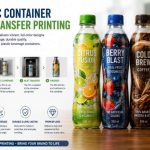
Heat Transfer Printing uses heat and pressure to transfer ink from a printed film onto a plastic surface.
This method is commonly used for curved or irregular plastic products.
Advantages
- High-quality graphics
- Vibrant colors
- Excellent for curved surfaces
- Strong ink adhesion
- Lower tooling cost
Disadvantages
- Slower than IML in mass production
- Lower durability compared to IML
- Not ideal for ultra-high-volume automation
Common Applications
- Plastic cups
- Cosmetic bottles
- Food containers
- Household packaging

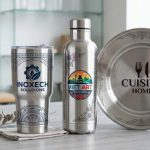
heat transfer printing process on plastic cups
IML – In Mold Labeling
What Is IML?
IML (In Mold Labeling) is a process where a pre-printed label is inserted into the mold before plastic injection or blow molding. The label permanently bonds with the container during molding.
Advantages
- Extremely durable
- Scratch-resistant
- Waterproof
- Premium appearance
- High automation compatibility
Disadvantages
- Higher initial investment
- Requires advanced machinery
- Less suitable for small production runs
Common Applications
- Ice cream containers
- Paint buckets
- Premium food packaging
- Industrial plastic containers
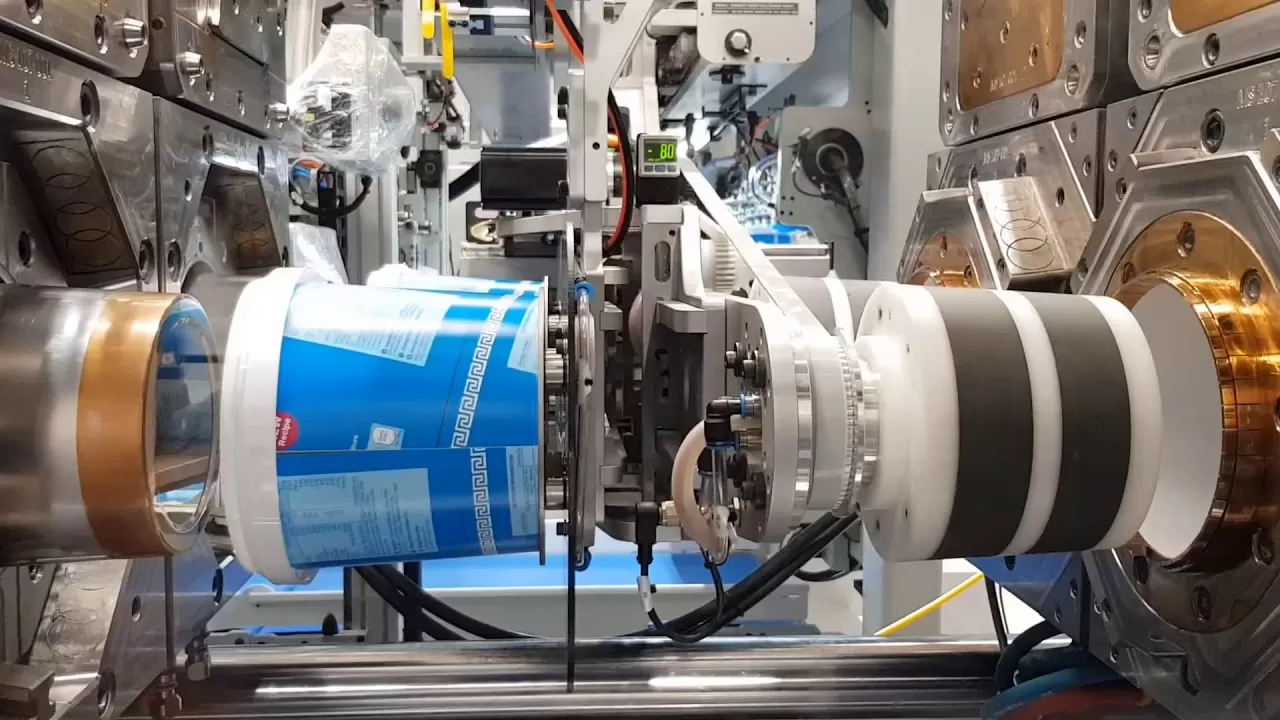
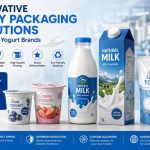
Image showing IML labeling inside an injection molding system
Heat Transfer vs IML: Which Technology Is Better?
The debate between heat transfer vs IML is one of the most common topics in plastic packaging manufacturing.
Detailed Comparison
| Criteria | Heat Transfer Printing | IML |
|---|---|---|
| Durability | Good | Excellent |
| Initial investment | Lower | Higher |
| Print quality | High | Ultra-high |
| Scratch resistance | Moderate | Excellent |
| Production speed | Medium | High |
| Small batch production | Suitable | Less efficient |
| Premium appearance | Good | Outstanding |
| Automation level | Medium | High |
When to Choose Heat Transfer Printing
Heat Transfer Printing is ideal for:
- Medium production volumes
- Frequent design changes
- Lower investment budgets
- Curved packaging designs
When to Choose IML
IML is best for:
- Large-scale production
- Premium packaging brands
- High durability requirements
- Fully automated factories
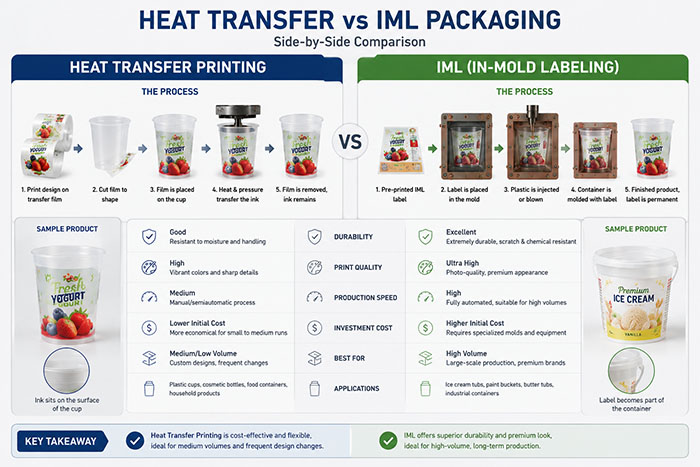
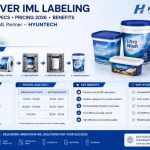
Side-by-side comparison image of Heat Transfer and IML packaging
Flexographic Printing
Flexographic Printing, commonly called Flexo Printing, uses flexible relief plates and fast-drying inks to print on plastic films and flexible packaging materials.
Advantages
- Very high production speed
- Cost-effective for large volumes
- Suitable for flexible packaging
Disadvantages
- Lower image quality than gravure
- Requires printing plates
Common Applications
- Plastic bags
- Snack packaging
- PE and PP films
Suggested image placement:
[Industrial flexographic printing machine in operation]
Gravure Printing
Gravure Printing is a premium industrial printing process that uses engraved cylinders for extremely detailed image reproduction.
Advantages
- Exceptional print quality
- Consistent color output
- Excellent for large production runs
Disadvantages
- Expensive cylinder production
- High setup costs
Common Applications
- Premium packaging
- Export food packaging
- Luxury cosmetic packaging
Digital Printing on Plastic
Digital Printing is rapidly growing due to its flexibility and customization capabilities.
Advantages
- No printing plates required
- Fast setup
- Ideal for personalized packaging
- Supports variable data printing
Disadvantages
- Higher unit cost for large volumes
- Slower than flexographic systems
Common Applications
- Short-run packaging
- Seasonal promotions
- Limited-edition products
Popular Labeling Methods for Plastic Packaging
Besides direct printing, many manufacturers use alternative labeling methods for plastic packaging.
| Labeling Method | Durability | Cost | Visual Appeal |
|---|---|---|---|
| Sticker Labels | Low | Low | Moderate |
| Shrink Sleeves | High | Medium | High |
| IML | Excellent | High | Premium |
| Heat Transfer | High | Medium | High |
| Screen Printing | Medium | Low | Moderate |
Printing on Plastic: Key Technical Factors
Plastic Material Type
Different plastics require different printing technologies.
Common materials include:
- PP (Polypropylene)
- PET
- HDPE
- PVC
- ABS
Ink Adhesion
Some plastics require surface treatment such as:
- Corona treatment
- Plasma treatment
These processes improve ink adhesion and print durability.
Environmental Conditions
Packaging exposed to:
- Moisture
- Chemicals
- UV light
- Freezing temperatures
requires highly durable printing solutions.
Plastic Packaging Printing Cost Comparison
Estimated Printing Costs in 2026
| Printing Technology | Estimated Cost | Minimum Order Quantity |
|---|---|---|
| Heat Transfer Printing | $0.02 – $0.06/unit | 5,000 pcs |
| IML | $0.04 – $0.14/unit | 20,000 pcs |
| Flexographic Printing | $0.01 – $0.04/unit | 50,000 pcs |
| Gravure Printing | $0.02 – $0.05/unit | 100,000 pcs |
| Digital Printing | $0.08 – $0.40/unit | No MOQ |
Pricing depends on packaging size, number of colors, material type, and production volume.
Industrial Printing Solutions for Modern Manufacturing
Today’s manufacturers are no longer focused only on print quality. The industry is moving toward fully integrated industrial printing solutions that improve automation, sustainability, and operational efficiency.
Key trends include:
- AI-based print inspection
- Robotic label insertion
- Smart packaging systems
- Reduced material waste
- Eco-friendly inks
- High-speed automated production
Modern factories increasingly adopt integrated systems that combine printing, labeling, molding, and quality control into one seamless workflow.
Future Trends in Packaging Printing Technologies
Sustainable Printing
Growing environmental regulations are driving demand for:
- Water-based inks
- UV-curable inks
- Recyclable labels
- Low-VOC printing systems
Smart Packaging
Advanced packaging now includes:
- QR code integration
- NFC technology
- AR-enabled packaging
- Digital traceability systems
AI in Plastic Packaging Printing
Artificial Intelligence is transforming industrial printing by helping manufacturers:
- Detect printing defects automatically
- Optimize color consistency
- Reduce production waste
- Predict machine maintenance needs
Hyuntech – Advanced Plastic Packaging Printing Solutions
For businesses searching for reliable expertise in plastic packaging printing methods, choosing the right technology partner is critical.
Hyuntech specializes in:
- Heat Transfer Printing systems
- IML automation solutions
- Industrial printing machinery
- Packaging production optimization
- Custom industrial printing solutions
Why Manufacturers Choose Hyuntech
- Extensive industry experience
- Advanced automation technologies
- Cost-optimized production consulting
- Professional technical support
- End-to-end industrial solutions
Industries Served
Hyuntech supports manufacturers in:
- Food packaging
- Cosmetics
- FMCG
- Household goods
- Industrial chemicals
- Consumer packaging
Conclusion
Choosing the right plastic packaging printing methods can significantly improve product presentation, manufacturing efficiency, and long-term business profitability.
Whether your company is comparing:
- Heat Transfer vs IML
- Packaging printing technologies
- Printing on plastic solutions
- Modern labeling methods
- Industrial printing solutions
understanding the strengths and limitations of each technology is essential for making the best investment decision.
For businesses looking to modernize their packaging production systems and achieve premium-quality plastic packaging, Hyuntech provides advanced, scalable, and future-ready industrial printing solutions.
read more: