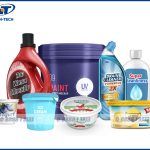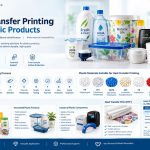
Heat Transfer Printing on Plastic Components | HyunTech
Heat transfer printing on plastic components is a printing solution that uses Heat Transfer Film (HTF) to apply logos, text, symbols, identification codes, or decorative patterns to the surface of plastic parts.
Unlike printing on packaging alone, plastic components often require higher standards for adhesion, positioning accuracy, abrasion resistance, print sharpness, and consistency across production batches.
HyunTech supplies heat transfer films and heat transfer printing services for various plastic materials, including PET, ABS, PP, HDPE, and other suitable plastic substrates.
[IMAGE PLACEHOLDER]
Image Name: heat-transfer-printing-on-plastic-components.jpg
Alt: Heat transfer printing on plastic components using HTF technology
Description: Industrial plastic components featuring sharply printed logos, symbols, and identification information using heat transfer film.
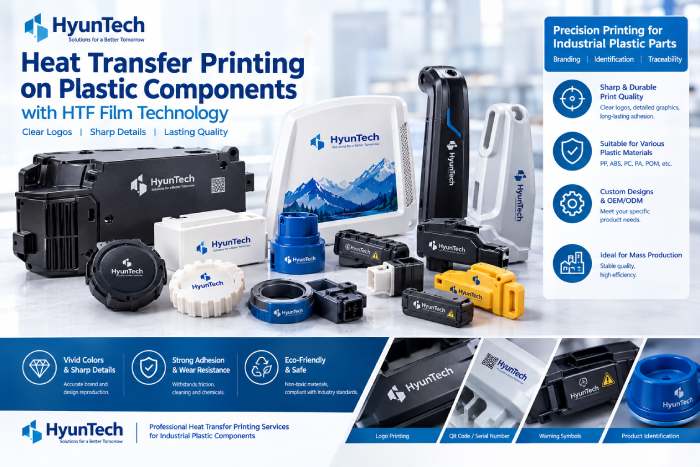
Heat Transfer Printing on Plastic Components Using HTF Technology
Read more:
Heat Transfer Printing for Plastic Products
What Is Heat Transfer Printing on Plastic Components?
Heat transfer printing on plastic components is a process in which images or information are first printed onto a heat transfer film, then transferred onto the surface of a plastic component using heat and pressure.
Depending on the component, plastic material, shape, and application requirements, HyunTech can recommend a suitable film type, transfer method, and processing parameters.
Plastic components can be printed with:
- Brand logos
- Product names
- ON/OFF symbols
- Technical symbols
- Operating instructions
- Product codes
- Component identification codes
- Serial numbers or variant information
- Decorative patterns
- Warning symbols
- Identification information on equipment housings
An important consideration is that there is no single temperature–time–pressure setting that works for every plastic component. Even products with the same shape may require different heat transfer processes when they are made from different plastics or have different surface characteristics.
Types of Plastic Components Suitable for Heat Transfer Printing
In industrial manufacturing, the types of components requiring printing can vary significantly. HyunTech provides heat transfer film solutions for materials such as PET, ABS, PP, HDPE, and many other substrates.
| Component Group | Example Products | Common Printing Applications |
|---|---|---|
| Plastic housings | Machine housings, equipment enclosures | Logos, brand names |
| Technical components | Covers, buttons, assembly parts | Symbols, product codes |
| Electrical components | Switch housings, equipment parts | ON/OFF symbols, icons |
| Electronic components | Module housings, protective cases | Logos, identification codes |
| Automotive/motorcycle components | Plastic trim, interior parts | Logos, symbols |
| Household products | Lids, boxes, plastic parts | Logos, instructions |
| Rigid plastic packaging | Bottles, jars, plastic containers | Logos, product information |
| Industrial plastic products | Machine parts, accessories | Component codes, identification |
Common Plastic Substrates
| Material | Key Printing Considerations | Typical Applications |
|---|---|---|
| ABS | Relatively stable surface; commonly used for housings and technical components | Equipment housings, electronic products |
| PP | Low surface energy; film adhesion needs to be evaluated | Boxes, lids, plastic components |
| PE/HDPE | Surface characteristics make film selection and surface treatment important | Containers, bottles, components |
| PET | Relatively suitable for many decorative and identification printing applications | Bottles, jars, packaging |
| PVC | Properties depend on material formulation and additives | Plastic parts, technical products |
| PMMA/Acrylic | Temperature needs to be carefully controlled to avoid affecting the surface | Decorative parts, panels, covers |
| PS | Heat resistance and component geometry need to be evaluated | Boxes, plastic parts |
Note: The table above is for general guidance. For mass production orders, the exact plastic grade, substrate color, surface gloss, surface coating, and actual component geometry should be evaluated before finalizing the heat transfer process.
Why Do Plastic Components Require a Dedicated Heat Transfer Printing Process?
Plastic components used in industrial applications often have more demanding requirements than conventional decorative products.
Adhesion
The printed layer must adhere properly to the plastic substrate. If the wrong film system is selected or the surface is not properly prepared, the print may peel, flake, or deteriorate during use.
For PP and PE/HDPE in particular, compatibility between the heat transfer film and substrate should be evaluated before large-scale production.
Positioning Accuracy
For technical components, logos and symbols often need to be positioned precisely according to the design specifications.
Even small deviations can affect:
- Appearance
- Symbol readability
- Assembly processes
- Product identification
- Customer inspection standards
Abrasion Resistance
Plastic components may be handled, assembled, or come into contact with other parts during use.
Therefore, when high durability is required, HyunTech recommends conducting practical post-printing tests rather than evaluating the print only by visual inspection.
Heat Resistance of the Plastic Substrate
Different plastics have different temperature limits and deformation characteristics. Therefore, heat transfer parameters should be determined based on:
Plastic type + material grade + surface condition + film type + component geometry + heat press/equipment + durability requirements.
A single fixed temperature should not be applied to all plastic components.
Parameters to Control When Heat Transfer Printing on Plastic Components
For an actual project, HyunTech typically needs to determine multiple parameters rather than focusing only on temperature.
| Parameter | Purpose | How It Is Determined |
|---|---|---|
| Plastic type | Determines material compatibility | PP, ABS, PET, HDPE, etc. |
| Substrate color | Determines print color and contrast | White, black, colored, transparent |
| Surface gloss | Affects adhesion and appearance | Glossy, matte, textured |
| Printing area size | Determines film/print dimensions | mm |
| Printing position | Controls positioning accuracy | According to drawing |
| Temperature | Activates the transfer process | Determined through testing |
| Pressing time | Ensures proper transfer | Determined through testing |
| Pressure | Creates contact between film and substrate | Based on machine/tooling |
| Production speed | Ensures production efficiency | pcs/hour |
| Adhesion | Evaluates print layer quality | Practical testing |
| Abrasion resistance | Evaluates durability after use | Based on customer requirements |
What Temperature Is Required for Heat Transfer Printing on Plastic?
This is one of the most important questions when customers submit plastic components for processing.
A single standard temperature should not be specified for every plastic product.
For example, ABS, PP, PET, and HDPE have different material characteristics. Even two different material grades of ABS may have different heat resistance and surface properties.
Therefore, the appropriate process should be determined through testing on actual samples.
A testing process may begin by systematically adjusting:
Temperature → Time → Pressure → Film Type → Surface Conditions
The results are then evaluated based on:
- Does the ink transfer completely?
- Is the image sharp?
- Are there any missing details?
- Is the plastic component deformed?
- Are the edges peeling?
- Does the adhesion meet requirements?
- Does the color match the approved sample?
This is why manufacturers of plastic components should provide actual samples or equivalent material samples to the processing supplier before starting mass production.
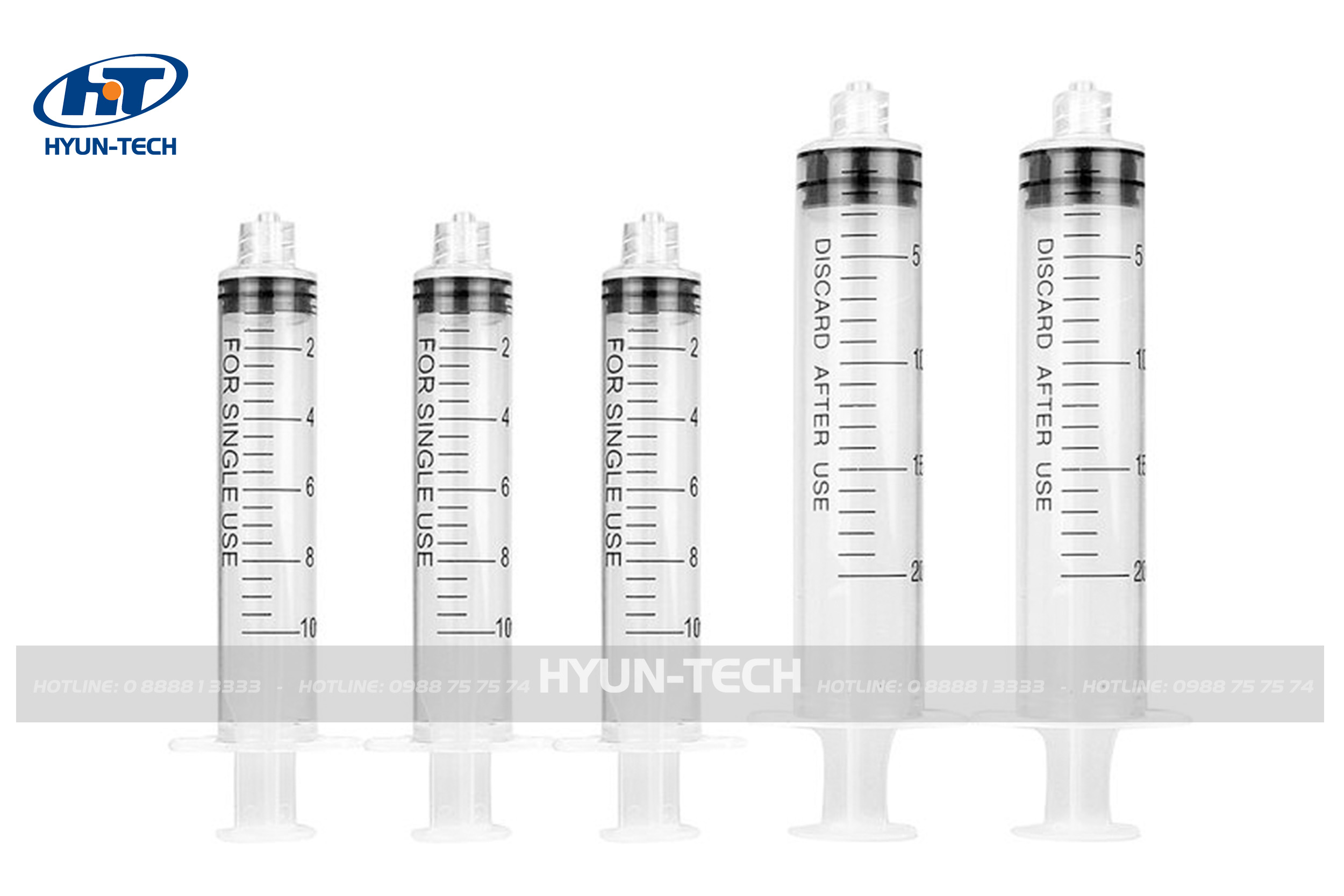
In chuyển nhiệt trên ống kim tiêm bằng công nghệ màng HTF
Heat Transfer Printing Process for Plastic Components at HyunTech
The actual process can be adjusted according to each product, but it generally includes the following key steps:
Sample Receiving → Material Inspection → Printing Area Identification → Film Recommendation → Artwork Preparation → Sample Testing → Evaluation → Sample Approval → Production → Quality Inspection → Delivery
Component Inspection
HyunTech evaluates:
- Material type
- Dimensions
- Shape
- Curvature
- Glossy/matte/textured surface
- Required printing position
- Substrate color
- Quantity
- Durability requirements
Artwork Design and Preparation
The artwork is prepared according to the actual dimensions of the plastic component.
For logos or technical symbols, the following factors need to be controlled:
- Text size
- Line thickness
- Spacing between details
- Logo proportions
- Color
- Relative position on the product
Sample Testing
This is an important step before mass production.
HyunTech can conduct testing on actual samples to determine the appropriate film system and heat transfer conditions.
Sample Approval
After transfer, the sample is evaluated for:
- Color
- Sharpness
- Position
- Coverage
- Adhesion
- Overall appearance
Once the sample meets the required specifications, mass production can begin.
[IMAGE PLACEHOLDER]
Image Name: hyuntech-heat-transfer-printing-process-plastic-components.jpg
Alt: Heat transfer printing process for plastic components at HyunTech
Description: Illustration of the process from plastic component inspection and HTF preparation to sample testing and mass production.
Which Plastic Parts Are Suitable for Heat Transfer Printing?
Heat transfer printing is not limited to bottles or plastic boxes. The technology can be considered for many different types of plastic components.
Plastic Equipment Housings
Possible printing applications include:
- Logo
- Brand name
- Model name
- Functional symbols
- Identification information
Buttons and Control Components
Symbols such as:
ON – OFF – START – STOP – POWER – RESET
can be designed and transferred onto the surface when the component structure and material are suitable.
Electrical and Electronic Components
For plastic housings or electronic components, heat transfer printing can be used for:
- Product codes
- Logos
- Technical information
- Icons
- Assembly symbols
Automotive and Motorcycle Components
Heat transfer printing can be considered for certain plastic interior components, trims, covers, or decorative parts, depending on the material and durability requirements.
Household Plastic Components
Lids, housings, boxes, handles, and other plastic components requiring brand identification can also be considered.
[IMAGE PLACEHOLDER]
Image Name: plastic-components-printed-with-logos-and-symbols.jpg
Alt: Plastic components printed with logos and symbols using heat transfer film
Description: Examples of plastic housings, buttons, and technical components printed with logos, functional symbols, and identification codes.
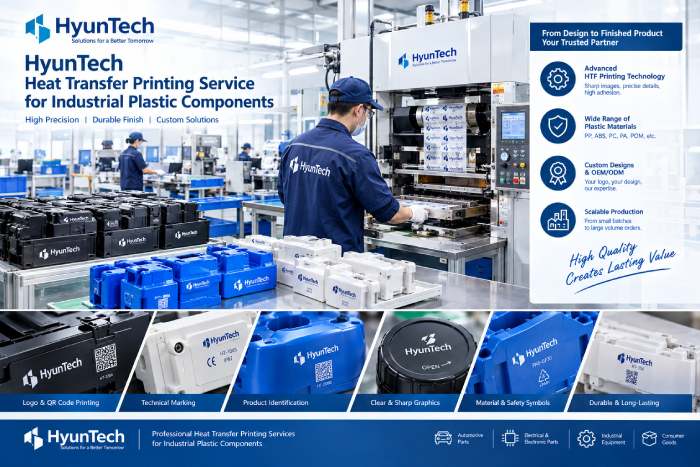
Hyun tech’s Processing and Production Area with Plastic Components Printed with Logos, Symbols, and Identification Information
Heat Transfer Printing vs. Other Plastic Component Printing Methods
| Criteria | Heat Transfer Printing | UV Printing | Pad Printing |
|---|---|---|---|
| Logos/graphics | Good | Good | Good |
| Curved surfaces | Can be handled depending on geometry | Depends on equipment | Suitable for many small components |
| Color options | Wide range | Wide range | Good |
| Fine details | High when properly configured | High | Suitable for small details |
| Decorative applications | Good | Good | Fairly good |
| Mold/tooling requirements | Depends on product | Depends on product | Usually requires fixtures |
| Suitable for industrial production | Yes | Yes | Yes |
| Cost | Depends on volume and film | Depends on equipment and volume | Depends on tooling/fixtures |
No single printing technology is ideal for every plastic component. The appropriate method should be selected based on material, geometry, production volume, durability requirements, printing area, and production budget.
Reference Pricing for Heat Transfer Printing on Plastic Components
Actual costs should not be calculated based solely on the number of products. For plastic components, pricing can also depend on film type, printing area, product geometry, number of colors, artwork complexity, testing requirements, and production volume.
| Item | Reference Pricing |
|---|---|
| Plastic component sample testing | Contact us |
| Simple logo/symbol printing | Contact us |
| Small-volume plastic component printing | Contact us |
| Medium-volume plastic component printing | Contact us |
| Large-volume production | Quoted based on production volume |
| HTF heat transfer film | Quoted according to film type |
| Artwork design/file adjustment | According to requirements |
| Custom processing according to technical drawings | Project-based quotation |
Note: This table is intended to provide general guidance on the cost structure and is not a fixed price list. For B2B orders, HyunTech needs to review the sample or technical specifications to provide an accurate quotation.
Factors That Determine Heat Transfer Printing Costs
Production volume is an important factor. Larger orders can generally allow preparation costs to be optimized on a per-piece basis.
Other factors include:
- Printing area size
- Number of colors
- Artwork complexity
- HTF film type
- Plastic type
- Component geometry
- Number of printing positions
- Durability requirements
- Quality inspection requirements
- Packaging and shipping
- Special customer requirements
HyunTech – Custom Heat Transfer Printing for Plastic Components
HyunTech Holdings develops heat transfer film and heat transfer printing solutions for a wide range of substrates, including plastics such as PET, ABS, PP, and HDPE.
For industrial customers, the key questions are not simply whether a component “can be printed,” but:
Will the print adhere properly?
Will the color match the required standard?
Will the printing position be accurate?
Will the plastic component be affected by heat?
Will quality remain consistent across production batches?
Can the cost per piece be optimized?
HyunTech prioritizes a process of sample inspection → testing → sample approval → production, especially for projects requiring large production volumes.
What Information Should Customers Provide for a Fast Quotation?
To receive an accurate consultation, customers only need to provide:
- Photos of the plastic component
- Product samples or technical drawings, if available
- Plastic type, if known
- Required printing area dimensions
- Logo/artwork file
- Estimated production quantity
- Durability requirements, if any
- Delivery location
Based on this information, HyunTech can make a preliminary assessment of printability, recommend a suitable heat transfer film, and develop an appropriate testing plan.
[IMAGE PLACEHOLDER]
Image Name: hyuntech-heat-transfer-printing-plastic-components.jpg
Alt: HyunTech heat transfer printing services for industrial plastic components
Description: HyunTech production/processing area with plastic components printed with logos, symbols, and identification information.
Sample Testing – Heat Transfer Printing Consultation – Quotation
If your company needs to print logos, symbols, product codes, or decorative graphics on plastic components, you should not select a printing method based on appearance alone.
Send actual plastic component samples or photos together with material specifications to HyunTech.
Our technical team can provide case-by-case consultation based on:
Plastic Type → Film Type → Printing Area → Transfer Method → Sample Testing → Adhesion Testing → Quotation → Production
HyunTech provides consultation and processing services for projects ranging from sample testing and small-volume production to large-scale industrial manufacturing.
Contact HyunTech Holdings
Hotline: 0332 837 260 – 088.881.3333
Email: contact@hyuntech.com.vn
Office: Lot BT11, Eurowindow River Park Urban Area, Dong Anh, Hanoi, Vietnam
HyunTech Hung Yen Factory: 312 Nguyen Van Linh, Hung Yen, Vietnam
HyunTech Holdings – Heat Transfer Film & Heat Transfer Printing Services
Send your plastic component samples to HyunTech for printability evaluation, solution consultation, and a product-specific quotation.
Frequently Asked Questions About Heat Transfer Printing on Plastic Components
Can heat transfer printing be applied to all types of plastic?
No. Printability depends on the plastic type, material grade, surface characteristics, substrate color, product geometry, and heat transfer film type.
For materials such as PP, PE/HDPE, or substrates with special surface characteristics, sample testing is recommended before mass production.
Is heat transfer printing on plastic components durable?
Durability depends on the film system, plastic substrate, transfer conditions, and actual usage environment.
For components requiring high abrasion resistance or long-term use, adhesion and durability testing should be conducted on the actual product samples before mass production.
What temperature is required for heat transfer printing on plastic components?
There is no single fixed temperature for all plastic components.
Temperature, time, and pressure need to be determined based on the plastic type, film type, surface characteristics, and equipment.
HyunTech recommends practical sample testing to determine the appropriate process parameters.
How is the price of heat transfer printing on plastic components calculated?
Pricing depends on production volume, printing area, number of colors, film type, component geometry, number of printing positions, durability requirements, and quality inspection procedures.
Large-volume production orders generally require project-based quotations to determine the most accurate cost.
Does HyunTech offer sample testing before mass production?
Yes. Customers are encouraged to provide plastic component samples or technical information so HyunTech can evaluate the material, printing area, and appropriate printing method.
Sample testing helps verify appearance, adhesion, and process suitability before mass production.