
Heat Transfer Printing on Plastic Parts | Hyuntech
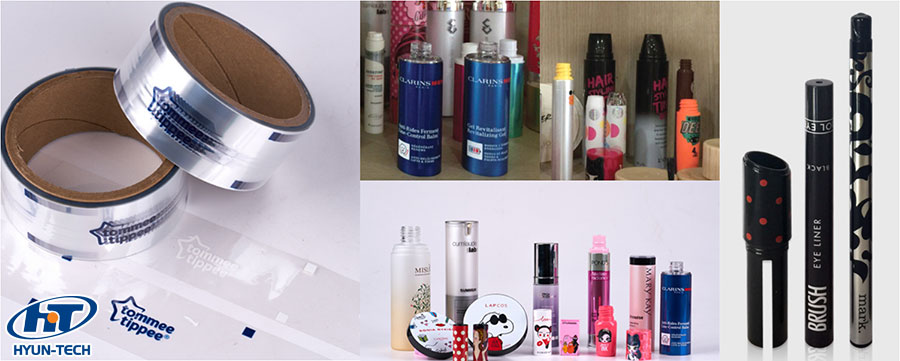
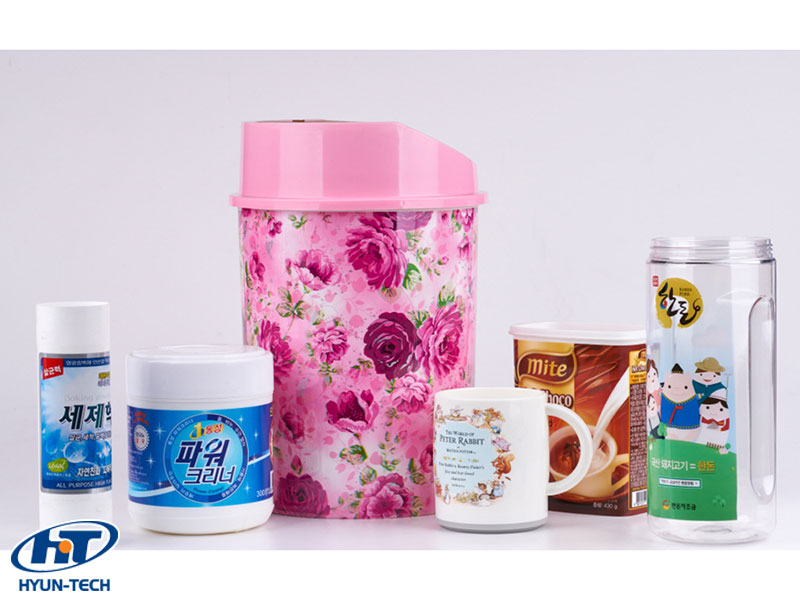
Heat transfer printing on plastic parts is a decorative technology used to apply logos, text, patterns and customized graphics to plastic components. By transferring pre-printed artwork from a specially prepared film onto a compatible plastic surface using controlled heat and pressure, manufacturers can achieve consistent product decoration for consumer goods, automotive components, electronics, household products and industrial applications.
For manufacturers, choosing the right heat transfer printing film is essential to achieving reliable transfer quality, suitable adhesion and a professional finish. Factors such as plastic resin, component geometry, surface texture, processing conditions and production volume influence the final result.
Hyuntech provides heat transfer printing film solutions for industrial applications. By evaluating the substrate, artwork and manufacturing requirements, businesses can identify suitable film options for plastic part decoration and develop a process that meets their quality and production targets.
Read more:
Heat Transfer Printing on Wood | HyunTech
Heat Transfer Printing on Glass Cups | Hyuntech
Heat Transfer Printing on Plastic Housings | Hyuntech
Heat Transfer Printing on Plastic Bottles | HyunTech
Heat Transfer Printing on Plastic Caps | Hyuntech
Heat Transfer Printing on Plastic Cups | Hyuntech
Heat Transfer Printing on Plastic Trays | Hyuntech
Heat Transfer Printing on Plastic Containers | Hyuntech
Heat Transfer Printing on Plastic Parts | Hyuntech
Heat Transfer Printing on Plastic Toys | Hyuntech
Heat Transfer Printing on Metal Boxes | Hyuntech
Heat Transfer Printing on Metal Bottles | Hyuntech
Heat Transfer Printing on Metal Utensils | HyunTech
Heat Transfer Printing on Glass Bottles | HyunTech
Heat Transfer Printing on Glass Jars | HyunTech
What Is Heat Transfer Printing on Plastic Parts?
Heat transfer printing on plastic parts is a process that transfers a pre-printed design from a carrier film onto a compatible plastic component through controlled heat and pressure. Depending on the film construction and application, the decoration may include brand logos, product identification, decorative patterns, multicolor graphics and functional markings.
Unlike conventional direct printing, the design is prepared on a transfer medium before being applied to the plastic component. This approach can support detailed graphics and repeatable decoration when the film, substrate and processing conditions are properly matched.
The final appearance and durability depend on film compatibility, surface geometry, temperature, pressure, dwell time and equipment configuration.
How Does Plastic Part Heat Transfer Printing Work?
The process generally involves artwork preparation, transfer film selection, component positioning, heat and pressure application, carrier removal and final quality inspection.
First, the artwork is prepared according to the dimensions and printable area of the plastic part. The transfer film is then positioned against the target surface. Heat and pressure are applied under validated conditions, after which the carrier is removed according to the film manufacturer’s instructions.
The finished component is inspected for incomplete transfer, misalignment, color variation, surface defects and other quality issues.
Types of Plastic Parts Suitable for Heat Transfer Printing
Heat transfer printing may be suitable for a variety of plastic components, depending on the substrate, surface geometry and production requirements.
- Automotive plastic parts: Decorative panels, selected interior trims and compatible molded components.
- Electronic plastic components: Housings, covers and selected consumer electronics enclosures.
- Household appliance parts: Decorative panels, control covers and exterior plastic components.
- Consumer product components: Handles, housings, covers and customized molded parts.
- Industrial plastic components: Identification graphics and decorative markings for selected equipment parts.
- Custom injection-molded parts: Branded components with specialized shapes and surface finishes.
Not every plastic part is suitable for the same film or transfer equipment. Material compatibility and component geometry should be evaluated before production.
Benefits of Heat Transfer Printing on Plastic Parts
Heat transfer printing can help manufacturers improve product appearance, support customized designs and maintain consistent decoration across production batches. Actual performance depends on the selected film, substrate and process conditions.
High-Quality Graphics and Product Branding
A suitable transfer film can reproduce detailed logos, text, patterns and multicolor artwork. This makes the technology useful for manufacturers that require clear product identification and a consistent visual identity.
Print clarity and color accuracy depend on artwork preparation, film construction, registration and validated transfer conditions.
Consistent Decoration for Mass Production
Once the transfer process has been validated, standardized operating parameters can help maintain repeatable results across production runs. Automated or semi-automated equipment may also reduce manual handling and improve production consistency.
Actual output depends on equipment configuration, component dimensions, cycle time, loading method and rejection rate.
Flexible Decorative Finishes
Depending on the transfer film construction, manufacturers may be able to achieve glossy, matte, metallic-effect or multicolor finishes. The availability of each finish depends on the film specification and the requirements of the plastic component.
Potential for Improved Manufacturing Efficiency
A well-controlled process can reduce incomplete transfers, rework and rejected components. Manufacturers can improve efficiency by optimizing film consumption, component positioning and operating conditions before mass production.
Heat Transfer Printing Process for Plastic Parts
A reliable manufacturing process begins with material evaluation and continues through film selection, trial production and quality inspection.
Artwork Preparation and Transfer Film Selection
The artwork is prepared according to the component dimensions, printable area, colors and registration requirements.
Film selection should consider the exact plastic resin, surface finish, component geometry, desired appearance and available equipment. A film that works well on one substrate should not automatically be assumed to perform well on another.
Hyuntech can be contacted to discuss film requirements and evaluate potential solutions for plastic part decoration.
Heat and Pressure Transfer
The plastic part and transfer film are positioned in the equipment, and heat and pressure are applied according to validated process parameters.
There is no universal temperature, pressure or dwell time for all plastic components. Excessive heat may deform certain substrates, while insufficient heat or pressure may cause incomplete transfer or poor adhesion.
The operating window should be established through trials using the actual component and production equipment.
Carrier Removal and Quality Inspection
After transfer, the carrier is removed according to the film manufacturer’s instructions. The finished component is then inspected for transfer completeness, graphic alignment, color variation, surface defects and deformation.
Adhesion, abrasion and chemical resistance should be evaluated using agreed test methods appropriate to the intended application.
Technical Specifications for Heat Transfer Printing on Plastic Parts
Technical specifications should be established for the actual plastic component, transfer film and production equipment. The following table provides a practical checklist for manufacturers.
| Parameter | Specification to confirm | Importance |
|---|---|---|
| Plastic substrate | PP, ABS, PC, PE, PS or another confirmed resin | Determines film compatibility |
| Component dimensions | Length, width, height and wall thickness | Affects positioning and processing |
| Surface geometry | Flat, curved, recessed or textured | Influences contact and transfer uniformity |
| Printable area | Dimensions and location of artwork | Supports accurate design placement |
| Transfer film | Film type, carrier and decorative-layer construction | Determines suitability for the application |
| Artwork | Colors, logo dimensions and registration tolerance | Maintains visual consistency |
| Transfer temperature | Validated operating range for the film and substrate | Helps prevent incomplete transfer or deformation |
| Transfer pressure | Equipment-specific validated setting | Influences contact and transfer quality |
| Dwell time | Validated contact duration | Affects transfer completeness and cycle time |
| Adhesion | Agreed test method and acceptance criteria | Evaluates decoration attachment |
| Durability | Required abrasion and chemical resistance | Reflects intended product use |
| Quality control | Inspection frequency and defect limits | Supports consistent production |
Which Plastic Materials Can Be Used for Heat Transfer Printing?
Polypropylene (PP): Commonly used in household products, packaging and molded components. Film selection and adhesion testing are important because surface properties can affect transfer performance.
Acrylonitrile butadiene styrene (ABS): Used in appliance housings, electronic enclosures and consumer products. The selected film must be compatible with the specific ABS grade and processing conditions.
Polycarbonate (PC): Used in selected rigid components and housings. Thermal sensitivity, surface characteristics and the film specification should be evaluated before processing.
Polyethylene (PE): Used in various molded products and industrial components. The resin grade and surface properties should be considered when selecting a suitable film.
Polystyrene (PS): Used in selected consumer products and molded parts. The substrate’s thermal characteristics should be assessed to avoid deformation during transfer.
These materials are not interchangeable. Manufacturers should confirm the exact resin and evaluate representative samples before approving a production process.
Quality Tests for Decorated Plastic Components
Before mass production, manufacturers should establish measurable quality requirements for:
- Visual appearance, color consistency and print registration.
- Transfer completeness and graphic edge definition.
- Adhesion using an agreed test method.
- Abrasion resistance during handling.
- Chemical resistance under expected operating conditions.
- Dimensional stability after heat transfer.
- Batch consistency and acceptable defect rates.
For automotive, electrical or other regulated applications, additional performance and compliance requirements may apply. The decoration process should be validated against the specifications of the finished product.
Heat Transfer Printing on Plastic Parts: Price and Cost Analysis
The cost of heat transfer printing on plastic parts depends on film specifications, design complexity, component dimensions, production volume, tooling, equipment configuration and quality requirements.
Manufacturers should distinguish between the purchase price of transfer film and the total decoration cost per accepted component. A complete cost estimate should include film consumption, artwork setup, processing, inspection and production losses.
Estimated Price Structure for Plastic Part Decoration
The following table is a budgeting framework, not a verified market price list. Actual prices should be confirmed with suppliers based on the specific application.
| Cost component | Factors affecting cost | Information needed for quotation |
|---|---|---|
| Heat transfer film | Film construction, dimensions, finish and order volume | Required film specifications |
| Artwork preparation | Design complexity, colors and print dimensions | Artwork files and design requirements |
| Tooling and setup | Part geometry, fixtures and equipment configuration | Component samples and production method |
| Transfer processing | Machine speed, labor and cycle time | Expected output and order quantity |
| Quality testing | Adhesion, abrasion and chemical resistance | Required standards and test methods |
| Packaging and delivery | Packaging format, order size and destination | Quantity and delivery terms |
How to Calculate Heat Transfer Printing Cost per Plastic Part
A practical calculation is:
Decoration cost per part = Total decoration costs ÷ Number of accepted parts
Total decoration costs should include transfer film, artwork setup, tooling where applicable, processing, quality inspection and production losses.
For example, if the total decoration cost for a production run is US$1,000 and the manufacturer obtains 50,000 accepted components, the calculated decoration cost is US$0.02 per part.
This is a hypothetical calculation to demonstrate the method, not a verified market price or a quotation from Hyuntech.
How to Reduce Plastic Part Decoration Costs
Manufacturers can improve cost efficiency by optimizing film consumption, standardizing artwork where practical, minimizing unnecessary changeovers and validating processing conditions before mass production.
Larger orders may reduce setup cost per part, but purchasing decisions should also account for inventory, material waste, quality requirements and production flexibility.
For an accurate quotation, provide the plastic resin, component dimensions, artwork, desired finish and estimated order quantity.
How to Choose Heat Transfer Printing Film for Plastic Parts
Selecting the right transfer film is essential for achieving consistent graphics, reliable adhesion and suitable product durability.
Check Compatibility with the Plastic Substrate
Identify the exact plastic resin and surface condition before selecting the film. Different plastics have different thermal and surface characteristics that can influence transfer quality.
Where necessary, the evaluation should also consider surface treatments, coatings and additives.
Evaluate Adhesion and Surface Durability
A suitable film should meet the required standards for decoration attachment and resistance to handling. If the component will be exposed to oils, detergents, solvents or other chemicals, these conditions should be included in the validation process.
Confirm Equipment and Production Requirements
Film selection should account for the available equipment, component geometry, target output and production environment. Suppliers should provide relevant technical information and help establish appropriate operating conditions.
Hyuntech can discuss heat transfer film requirements for plastic part applications and help manufacturers evaluate suitable options based on their project specifications.
Heat Transfer Printing vs. Other Plastic Part Decoration Methods
Heat transfer printing is one of several methods used to decorate plastic components. Manufacturers should compare it with pad printing, direct screen printing and in-mold decoration before selecting a production method.
| Comparison factor | Heat transfer printing | Pad printing | Direct screen printing | In-mold decoration |
|---|---|---|---|---|
| Graphic reproduction | Detailed designs when film and surface are compatible | Suitable for selected logos and small graphics | Suitable for compatible surfaces and artwork | Decoration integrated during molding |
| Surface suitability | Depends on component geometry and transfer equipment | Suitable for selected irregular surfaces | Depends on screen access and surface shape | Requires compatible mold and process design |
| Decoration material | Pre-printed transfer film | Printing ink | Printing ink | Printed film or decorative layer |
| Setup requirements | Film, fixtures and transfer parameters | Pad, cliché and ink setup | Screen and ink setup | Specialized tooling and molding process |
| Main consideration | Film compatibility and transfer consistency | Image distortion and surface access | Surface access and ink adhesion | Tooling cost and process complexity |
No method is universally best. The right choice depends on the plastic material, design complexity, production volume, durability requirements and total manufacturing cost.
Applications of Heat Transfer Printing on Plastic Parts
Automotive Plastic Components
Heat transfer printing may be considered for selected interior trims, decorative panels and other compatible automotive plastic parts. Requirements for abrasion, temperature resistance, chemicals and appearance should be defined according to the component’s function.
Electronic Housings and Appliance Parts
Plastic enclosures and appliance panels may require product logos, decorative graphics and identification markings. Film selection should account for the substrate, surface geometry and expected handling conditions.
Consumer Products and Household Components
Manufacturers of household products, personal care items and consumer goods may use heat transfer decoration to improve appearance and brand recognition across product lines.
Industrial and Custom-Molded Plastic Parts
Custom-molded components may require specialized artwork, localized decoration or product identification. Sample testing helps determine whether the selected film and equipment can meet the required quality standards.
Frequently Asked Questions About Heat Transfer Printing on Plastic Parts
What is heat transfer printing on plastic parts?
Heat transfer printing is a decoration process that transfers pre-printed artwork from a carrier film onto a compatible plastic component using controlled heat and pressure. It can be used for logos, text and decorative graphics.
Which plastic materials are suitable for heat transfer printing?
PP, ABS, PC, PE and PS may be considered for selected applications. Suitability depends on the exact resin, surface geometry, film construction and processing conditions. Testing is recommended before mass production.
How much does heat transfer printing on plastic parts cost?
The cost depends on film specifications, artwork complexity, component dimensions, order quantity, tooling and processing requirements. An accurate quotation requires material details, component samples or dimensions, artwork and expected production volume.
Is heat transfer printing durable on plastic components?
Durability depends on film compatibility, transfer conditions and the intended application. Adhesion, abrasion and chemical resistance should be tested against agreed acceptance criteria before production approval.
Where can I buy heat transfer printing film for plastic parts?
You can contact Hyuntech through its official website to discuss heat transfer printing film solutions. Provide the component material, dimensions, artwork, desired finish and production volume to support a technical evaluation and quotation.
Contact Hyuntech for Heat Transfer Printing Film Solutions
Choosing a suitable heat transfer printing film can help plastic component manufacturers achieve consistent decoration, maintain product quality and meet branding requirements.
Hyuntech welcomes inquiries from OEM manufacturers, plastic injection molding companies, product designers and industrial printing businesses seeking heat transfer printing film solutions for plastic parts and other plastic products.
To help evaluate your project, prepare the following information:
- Plastic material: PP, ABS, PC, PE, PS or another specified resin.
- Component specifications: Dimensions, shape, surface condition and printable area.
- Artwork: Logo, colors, patterns and desired decorative finish.
- Production requirements: Estimated order quantity and target output.
- Performance requirements: Adhesion, abrasion, chemical resistance and applicable industry standards.
Visit the official Hyuntech website to discuss your requirements, request technical information and obtain a quotation based on your application.
HyunTech – Heat Transfer Films & Industrial Printing Solutions
Hotline: 0332 837 260 – 088.881.3333
Email: contact@hyuntech.com.vn
Office: Lot BT11, Eurowindow River Park Urban Area, Dong Hoi, Dong Anh, Hanoi, Vietnam
Factory: 312 Nguyen Van Linh, Hung Yen, Vietnam
Website: https://hyuntech.com.vn/
Bài viết cùng chủ đề
-
 Industrial Packaging Printing Solutions for Plastic Products
-
 Advanced Packaging Printing Solutions for Industry
-
 Waterproof Printing Technology for Packaging
-
 Advanced Food Container Printing Technology for Safe Packaging
-
 Plastic Container Printing Solutions for Packaging
-
 Industrial Packaging Printing Solutions for Heavy-Duty Products