Heat Transfer Printing on Metal Utensils | HyunTech
Heat transfer printing on metal utensils is an effective decoration method for manufacturers seeking durable, consistent and visually attractive designs on metal products. From stainless steel water bottles and travel mugs to metal lunch boxes, kitchen utensils, promotional gifts and industrial components, heat transfer printing enables businesses to apply customized graphics, logos and product identification designs to a wide range of rigid surfaces.
For B2B manufacturers, choosing the right heat transfer film, ink system, surface treatment and application parameters is essential to achieving reliable printing quality at scale. The process must balance image sharpness, adhesion, production efficiency and cost per unit.
HyunTech provides printing technology and heat transfer film solutions for industrial applications, supporting manufacturers that require customized decoration for metal products. This article explains the printing process, suitable metal materials, technical considerations, estimated costs and key factors to evaluate when selecting a heat transfer printing partner.
Read more:
Heat Transfer Printing on Wood | HyunTech
Heat Transfer Printing on Glass Cups | Hyuntech
Heat Transfer Printing on Plastic Housings | Hyuntech
Heat Transfer Printing on Plastic Bottles | HyunTech
Heat Transfer Printing on Plastic Caps | Hyuntech
Heat Transfer Printing on Plastic Cups | Hyuntech
Heat Transfer Printing on Plastic Trays | Hyuntech
Heat Transfer Printing on Plastic Containers | Hyuntech
Heat Transfer Printing on Plastic Parts | Hyuntech
Heat Transfer Printing on Plastic Toys | Hyuntech
Heat Transfer Printing on Metal Boxes | Hyuntech
Heat Transfer Printing on Metal Bottles | Hyuntech
Heat Transfer Printing on Metal Utensils | HyunTech
Heat Transfer Printing on Glass Bottles | HyunTech
Heat Transfer Printing on Glass Jars | HyunTech
What Is Heat Transfer Printing on Metal Utensils?
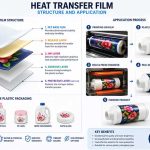
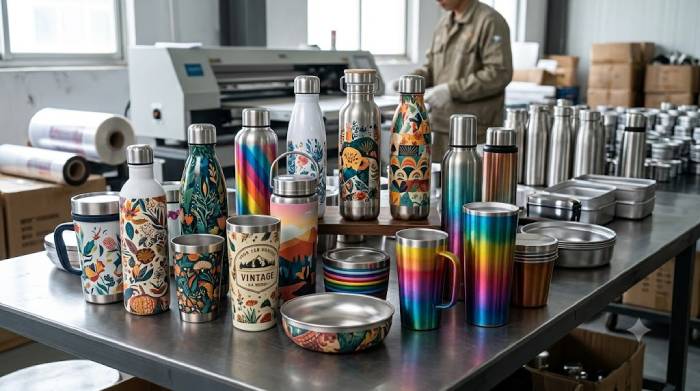
Heat transfer printing on metal utensils is a decoration process that transfers a pre-printed design from a specially prepared film onto a compatible metal surface using controlled heat and pressure. Depending on the product, coating system and production requirements, the transfer process may use different film structures and application methods.
Unlike conventional direct printing, heat transfer printing allows the design to be prepared separately before being applied to the finished component. This can help manufacturers achieve consistent graphics, repeatable colors and efficient production across multiple product batches.
Typical applications include:
- Stainless steel water bottles and insulated tumblers.
- Metal mugs, cups and travel drinkware.
- Metal lunch boxes and food containers.
- Kitchen utensils and selected cookware components.
- Metal promotional gifts and branded merchandise.
- Aluminum accessories, metal housings and product identification parts.
The suitability of the process depends on the metal substrate, its surface finish, geometry and the compatibility of the transfer system. Not every metal surface can be printed successfully using the same film or process settings.
How Does the Metal Heat Transfer Printing Process Work?
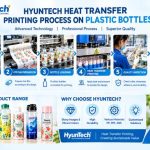
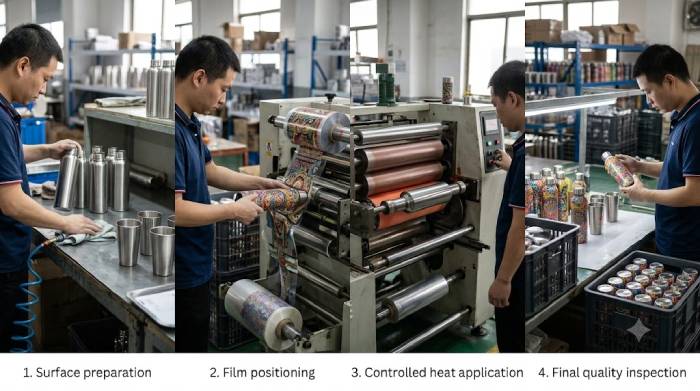
Heat transfer printing involves several coordinated stages. Each stage affects the final appearance, adhesion and consistency of the printed product.
Metal Surface Preparation
The metal surface must be clean and compatible with the selected transfer system. Oil, dust, fingerprints, polishing compounds and other contaminants can interfere with adhesion.
Depending on the substrate and coating, preparation may involve cleaning, degreasing, drying or applying a suitable primer or surface coating. Stainless steel, aluminum and pre-coated metal products may require different preparation methods.
For insulated bottles and tumblers, manufacturers should also assess the existing paint or powder coating. The transfer system must be compatible with that finish, rather than relying on the metal type alone.
Design Preparation and Heat Transfer Film Selection
The artwork is prepared according to the product dimensions, printing area and production requirements. Important design considerations include image resolution, color consistency, line thickness, placement and repeatability.
The transfer film must be selected according to the target metal surface, coating, design complexity and application conditions. Film construction, release characteristics and ink compatibility all influence the final result.
For large production runs, testing the complete film, ink, coating and substrate combination before mass production helps reduce waste and avoid inconsistent printing.
Controlled Heat and Pressure Application
The prepared transfer material is positioned on the product and processed using compatible equipment. Temperature, pressure and dwell time must be established through technical trials.
There is no universal temperature or pressing time suitable for every metal utensil. Excessive heat can damage certain coatings, while insufficient heat or pressure may result in incomplete transfer or inconsistent adhesion.
Manufacturers should follow the technical recommendations for the selected film and product finish, then validate the settings on representative samples.
Cooling, Film Removal and Quality Inspection
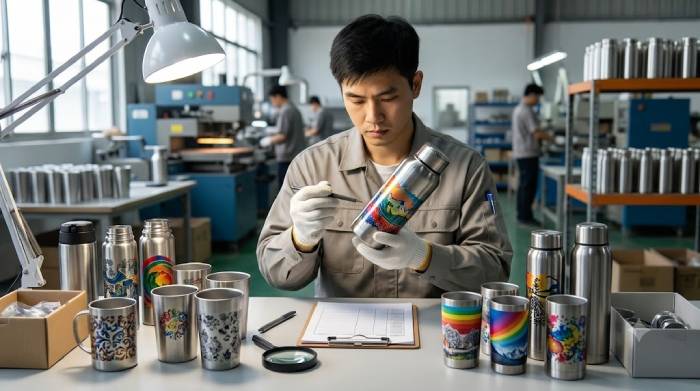
After the transfer cycle, the film is removed according to the system’s instructions. The product is inspected for incomplete transfer, blurred edges, scratches, color variation, wrinkles and surface defects.
Where required, additional testing can evaluate adhesion, abrasion resistance and performance under the product’s intended use conditions.
Which Metal Materials Are Suitable for Heat Transfer Printing?
The success of heat transfer printing depends on both the base material and its surface finish. A metal product with a compatible coating may be suitable even when an uncoated product made from the same metal is not.
Stainless Steel Utensils and Drinkware
Stainless steel is widely used for reusable bottles, travel mugs, tumblers, food containers and kitchen accessories. Its strength and corrosion resistance make it attractive for consumer products and promotional merchandise.
However, bare stainless steel is not automatically compatible with every heat transfer film. Many applications rely on a suitable pre-coated surface or another compatible transfer system. The coating must withstand the application conditions without discoloration, peeling or deformation.
Aluminum Utensils and Components
Aluminum is used in lightweight containers, accessories, housings and selected kitchen products. Its surface may be bare, anodized, painted or coated.
Each surface condition presents different printing requirements. Manufacturers should verify whether the transfer film is compatible with the specific aluminum finish and whether the application process could affect the coating.
Coated Metal Products
Pre-coated metal products can provide a suitable surface for decorative transfer when the coating has been designed and tested for the process.
Examples include powder-coated drinkware, painted metal accessories and selected coated promotional products. The coating’s composition, curing quality, thickness and heat resistance must be considered before production.
| Metal product type | Typical application | Key technical consideration |
|---|---|---|
| Stainless steel bottles | Branding and decorative graphics | Compatibility of the outer coating |
| Travel mugs and tumblers | Full or partial surface decoration | Curvature and transfer uniformity |
| Aluminum accessories | Logos and product graphics | Surface finish and heat sensitivity |
| Metal lunch boxes | Decorative panels and branding | Coating compatibility and geometry |
| Promotional metal gifts | Customized logos and designs | Repeatability across production batches |
| Industrial metal components | Identification and graphics | Adhesion and operating environment |
The table provides general application guidance rather than a guarantee of compatibility. Sample testing is recommended before committing to production.
Technical Specifications for Industrial Metal Heat Transfer Printing
For B2B production, technical requirements should be defined before selecting a film or approving a production process. This makes it easier to compare suppliers, evaluate samples and maintain consistent output.
Key Technical Parameters
| Parameter | What to evaluate | Recommended approach |
|---|---|---|
| Substrate | Stainless steel, aluminum or other metal | Identify the exact material and surface finish |
| Surface condition | Bare, painted, powder-coated or anodized | Confirm compatibility with the transfer system |
| Film structure | Film, release layer and ink system | Select according to the application |
| Application temperature | Process temperature at the product surface | Establish through supplier guidance and trials |
| Application pressure | Pressure applied during transfer | Validate for the equipment and product geometry |
| Dwell time | Duration of heat and pressure | Optimize through sample testing |
| Image quality | Color, sharpness and graphic consistency | Inspect approved reference samples |
| Adhesion | Bond between the transferred design and surface | Use an agreed test method |
| Durability | Resistance to abrasion, cleaning and intended use | Validate against the product’s real conditions |
| Production consistency | Variation between units and batches | Define acceptance criteria and inspection procedures |
Temperature, pressure and dwell time should not be treated as fixed universal values. The appropriate settings depend on the transfer film, metal coating, product shape and equipment.
Quality Tests Before Mass Production
A practical qualification program should include visual inspection, adhesion assessment and durability tests appropriate to the intended product.
For drinkware and reusable utensils, testing may also include resistance to routine washing, handling and surface abrasion. Products intended for contact with food require separate evaluation of applicable food-contact requirements. A decorative printing process alone does not establish that the finished product is food-safe.
Manufacturers should agree on acceptance criteria before mass production, including permissible color variation, image position, surface defects and performance after testing.
Advantages of Heat Transfer Printing for Metal Utensils
Heat transfer printing offers several benefits for manufacturers that need customized metal products in repeatable quantities. The actual performance depends on the selected transfer system and product design.
High-Quality Graphics and Branding
The process can reproduce detailed graphics, logos, decorative patterns and product identification designs. With a suitable film and controlled application process, manufacturers can achieve consistent visual results across multiple production batches.
This is particularly useful for drinkware brands, promotional gift suppliers and OEM manufacturers that need products to match an approved design.
Flexible Designs for OEM and ODM Production
Manufacturers can develop customized artwork for different customers, product collections and seasonal campaigns. This supports private-label production and helps brands differentiate visually similar metal products.
Before production, the artwork should be checked against the usable printing area, curved surfaces and any handles, seams or raised features.
Repeatable Production for B2B Orders
When the film, substrate, equipment and process parameters are controlled, heat transfer printing can support repeatable production across large orders.
A standardized workflow helps reduce avoidable defects, improve inspection efficiency and maintain a consistent appearance between batches.
Potentially Lower Decoration Costs at Scale
The cost per unit can become more competitive when setup costs are distributed across a larger production quantity. However, actual savings depend on film consumption, equipment requirements, labor, product geometry, reject rates and the complexity of the artwork.
Businesses should compare the total decoration cost rather than evaluating the transfer film price alone.
Heat Transfer Printing vs. Other Metal Printing Methods
Choosing the right decoration technology requires evaluating the product’s appearance, quantity, durability requirements and production budget.
| Printing method | Main advantages | Important limitations | Typical applications |
|---|---|---|---|
| Heat transfer printing | Detailed graphics and flexible designs | Requires compatible surfaces and process validation | Drinkware, promotional products, coated metal items |
| Screen printing | Suitable for repeatable designs and selected production runs | Artwork and surface geometry may limit flexibility | Logos, simple graphics and industrial products |
| UV printing | Direct digital printing and variable artwork | Adhesion and durability depend on the ink and surface | Personalized metal items and product graphics |
| Laser marking | Permanent marking on suitable materials | Usually not suitable for full-color decorative graphics | Serial numbers, identification and logos |
| Pad printing | Useful for selected small or irregular surfaces | Printing area and artwork complexity may be limited | Small metal components and accessories |
No single printing method is best for every application. Heat transfer printing is worth evaluating when a manufacturer needs decorative graphics on compatible coated metal surfaces, while laser marking may be more appropriate for permanent identification without color.
For curved bottles and tumblers, the product geometry must be considered carefully because the transfer process and tooling may differ from those used for flat metal panels.
Heat Transfer Printing on Metal Utensils: Estimated Price Guide
Pricing depends on the product, artwork, film specification, order quantity and required quality tests. The following figures are illustrative budgeting estimates in USD, not verified HyunTech quotations or current market prices. They should be replaced with project-specific pricing before publication as a commercial offer.
Estimated Decoration Costs
| Cost item | Indicative budget | Main pricing factors |
|---|---|---|
| Artwork and production setup | $50–$200 per design | Artwork complexity and preparation |
| Sample development | $30–$150 per project | Number of samples and testing requirements |
| Transfer film | $0.03–$0.20 per piece | Film area, material and design coverage |
| Printing and application | $0.10–$0.50 per piece | Labor, equipment and product geometry |
| Quality inspection | $0.02–$0.10 per piece | Inspection scope and order requirements |
These estimates are intended only to help structure a preliminary cost discussion. They are not additive in every project, and some suppliers may include setup, film and application within a single unit price.
Example of Estimated Production Costs
The following example illustrates how order quantity can affect the budget for decorating compatible metal drinkware.
| Cost component | 1,000 units | 10,000 units |
|---|---|---|
| Setup and artwork | $100 | $100 |
| Film and printing | $250 | $2,000 |
| Application and handling | $250 | $1,500 |
| Inspection | $50 | $300 |
| Estimated total | $650 | $3,900 |
| Estimated cost per unit | $0.65 | $0.39 |
The example uses hypothetical costs for illustration. It excludes the metal products themselves, shipping, taxes, tooling where applicable, packaging, and any additional qualification tests. Actual pricing may be higher or lower depending on the production specification.
What Determines the Final Quotation?
To obtain a reliable quotation, manufacturers should provide the following information:
- Metal type and exact surface finish.
- Product dimensions, shape and printable area.
- Artwork file and expected color requirements.
- Estimated order quantity and annual demand.
- Required adhesion and durability performance.
- Sample requirements and production delivery schedule.
Providing these details allows the supplier to assess technical feasibility and calculate the expected cost more accurately.
Common Challenges in Metal Heat Transfer Printing and How to Solve Them
Poor Adhesion or Peeling Graphics
Poor adhesion may result from an incompatible coating, contaminated surfaces, incorrect application conditions or unsuitable transfer film.
Solution: Confirm the surface specification, clean the product appropriately and test the complete transfer system on production-representative samples. Define an adhesion acceptance standard before approving the process.
Uneven Printing on Curved Metal Surfaces
Cylindrical bottles and tumblers can present challenges when the design crosses curved areas or approaches the edges of the printable zone.
Solution: Adapt the artwork to the product geometry, verify alignment and use compatible tooling or application equipment. Inspect the printed design from multiple viewing angles.
Color Inconsistency Between Batches
Color variation may occur because of differences in artwork preparation, film batches, coating colors, equipment settings or production conditions.
Solution: Maintain approved artwork files, reference samples and documented process parameters. Where accurate color matching is essential, agree on a suitable measurement method and acceptable tolerance with the supplier.
Damage to the Metal Coating
Excessive heat or unsuitable processing conditions can affect certain paints, powder coatings and other surface finishes.
Solution: Verify the coating’s thermal limits and establish suitable process settings through controlled trials. Do not assume that a coating designed for everyday use can automatically tolerate every heat transfer process.
Why Choose HyunTech for Industrial Heat Transfer Printing Solutions?
HyunTech supports B2B customers seeking printing and heat transfer film solutions for rigid products, including selected metal items and customized components.
For manufacturers developing new products or improving an existing decoration process, the most important consideration is finding a solution that meets the actual substrate, production and quality requirements.
Technical Support for Product-Specific Applications
Metal products vary significantly in their surface finishes, geometry and thermal resistance. HyunTech can discuss the intended application and help evaluate the technical requirements for selecting a suitable heat transfer film or printing process.
Sample evaluation is particularly important when a project involves a new coating, complex artwork or a demanding durability requirement.
Solutions for OEM and ODM Manufacturers
OEM and ODM manufacturers often need consistent decoration across different product models and customer specifications. A clearly defined transfer process can support customized designs, repeat orders and more predictable production planning.
HyunTech’s industrial printing focus is relevant to businesses developing branded drinkware, promotional items and other rigid products, subject to confirmation of the specific material and process compatibility.
Manufacturing-Oriented Quality and Production Planning
Successful B2B printing requires more than an attractive sample. Production planning should also address material consistency, process repeatability, inspection procedures, order volume and delivery requirements.
HyunTech can work with customers to clarify these requirements during project evaluation and determine the appropriate next steps for sample testing and quotation.
How to Start a Metal Printing Project with HyunTech
To help evaluate your project, prepare a product photograph or technical drawing, identify the metal and surface coating, and share your artwork and expected order quantity.
The technical team can then review the application requirements and discuss whether the proposed heat transfer system is appropriate. Final performance, pricing and production feasibility should be confirmed through technical assessment and sample approval.
Contact HyunTech to discuss your metal product decoration requirements and request a project-specific consultation.
Website: https://hyuntech.com.vn/
For international inquiries, visit: https://hdecal.com.vn/
Frequently Asked Questions About Heat Transfer Printing on Metal Utensils
Can heat transfer printing be used on stainless steel utensils?
Yes, selected stainless steel products can be decorated using a compatible heat transfer system. The surface finish is critical: bare stainless steel may require a different approach from painted or powder-coated stainless steel. Sample testing is recommended before mass production.
What temperature is required for heat transfer printing on metal?
There is no single temperature that works for every metal product. The correct temperature, pressure and dwell time depend on the transfer film, surface coating, product geometry and equipment. Manufacturers should follow the relevant technical specifications and validate the process using samples.
Is heat transfer printing durable on metal bottles and tumblers?
Durability depends on the film, ink system, coating, application conditions and intended use. Adhesion, abrasion and cleaning resistance should be tested against the product’s actual requirements. Food-contact suitability and dishwasher resistance must be evaluated separately where relevant.
How much does heat transfer printing on metal utensils cost?
The cost varies with order quantity, artwork complexity, printing area, film specification, equipment and quality requirements. A reliable quotation requires product details and a defined scope. Any preliminary estimate should be treated as indicative until confirmed by the supplier.
Can HyunTech support customized heat transfer printing projects for metal products?
HyunTech can discuss B2B printing and heat transfer film requirements for selected rigid products. Customers should provide the metal type, surface finish, product dimensions, artwork and estimated quantity so that technical compatibility, sample requirements and commercial terms can be evaluated.
Develop Your Next Metal Product Decoration Project with HyunTech
High-quality heat transfer printing on metal utensils requires the right combination of transfer film, surface preparation, application conditions and quality control. By evaluating these factors before mass production, manufacturers can improve design consistency, reduce avoidable defects and establish a more reliable decoration process.
Whether you are developing customized stainless steel drinkware, promotional metal products or other rigid components, HyunTech can discuss your technical requirements and help determine the next steps for evaluating a suitable printing solution.
Contact HyunTech today to discuss your application, evaluate sample requirements and request a quotation for your B2B metal printing project.
HyunTech – Heat Transfer Films & Industrial Printing Solutions
Hotline: 0332 837 260 – 088.881.3333
Email: contact@hyuntech.com.vn
Office: Lot BT11, Eurowindow River Park Urban Area, Dong Hoi, Dong Anh, Hanoi, Vietnam
Factory: 312 Nguyen Van Linh, Hung Yen, Vietnam
Website: https://hyuntech.com.vn/